|
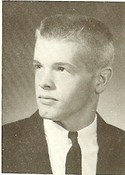
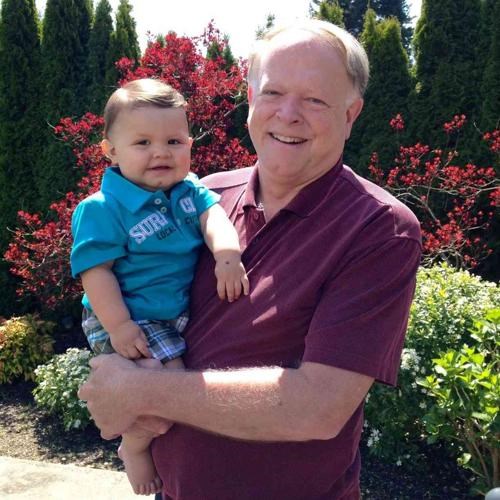
Alan Scott Haskins Obituary
Published by Legacy Remembers on Jul. 13, 2023.
Alan Scott Haskins, 74, of Seattle, Washington, died on June 26th, 2023, at University of Washington Medical Center in Seattle, after a nearly three-year illness with Cholangiocarcinoma. He was born in Eugene, Oregon on November 19th, 1948, to Norma Jean (Goodding) Haskins and Dale Quinton Haskins.
Scott is survived by his five children and their spouses: Jason Scott Haskins, Ross Robert Haskins (Audrie Woods), Martin John Haskins (Klaudia Padilla Haskins), Todd Dale Haskins (Marne), and Kelley Randall Haskins (Eric Finley); siblings: Cindy Leonetti and Craig Haskins (Claudia Bloom-Haskins); grandson Deandre Haskins; brothers-in-law: John Bloom (Marguerite), Randall Bloom (Mary Beth Broe), and Robert Bloom; sisters-in-law: Diane Bloom-Graves (Glen Graves) and Maureen Bloom-Flora (Bart Flora); uncle Garry Crosser (Ethel); and a large extended family of cousins, nieces, nephews, and their spouses. Scott was preceded in death by his wife, Kathleen Bloom-Haskins; parents, Norma and Dale Haskins; and Kathleen's parents, John and Peggy Bloom.
During his childhood, Scott resided in Oregon, New Mexico, Colorado, and Washington while his father worked as a landscape architect for the Oregon Highway Department, the National Park Service in Santa Fe, and as an administrator at the U.S. Government's Bureau of Outdoor Recreation in Denver and Seattle. Scott's childhood helped shape his core values in life, which included love, family, and integrity.
Some of Scott's fondest memories in early childhood included his newspaper route in Eugene, playing baseball in his Portland neighborhood, and building a close bond with his siblings, Cindy and Craig. He considered moving to Santa Fe, NM in the middle of his 7th grade school year as a turning point, calling it "one of the cultural experiences that influenced my life." There he enjoyed occasional weekend outings with his family to Taos, Albuquerque, and Bandelier National Monument.
Despite being young for his grade and living in multiple cities, Scott proved to be both adaptable and highly motivated, excelling in academics and sports. During middle school, he won a speech competition in front of the entire student body - fitting to those who knew Scott, his speech was about the power of optimism. That experience helped Scott become more comfortable speaking in public, a skill that served him well in college, throughout his career, and at gatherings with his extended family. One of Scott's most routinely relived memories in Santa Fe was accidentally causing a garage fire when he attempted to handle gasoline for the lawn mower. Despite all the damage to the house, Scott recalled it as leading to possibly the most enjoyable summer of his life. His time in Santa Fe coincided with the Cuban Missile Crisis of 1962, and Scott recalled participating in drills in the hallway of his school.
After a short stay in Denver, CO, his family moved to the Seattle area, where Scott would live for the rest of his life. Scott graduated from Meadowdale High School in Lynnwood, WA in 1966 where he continued to excel academically and enjoyed participating in athletics (baseball, cross-country, and varsity basketball). He attended the University of Washington where he received his Bachelor of Arts Degree in Political Science. Scott was active in the civil rights and anti-war movements of the late 1960s and early 70s. He participated in student leadership and was a seed for change on campus. Scott, along with many other student leaders, played a role in integrating the university. As a resident hall director he collaborated with the newly-formed Black Student Union to desegregate the dormitories, including Lander Hall where he was housed at the time. Scott also served on a student committee that proposed changes to the board regarding the school's admissions policy, with the goal of making the student body more diverse and representative of the overall population. Years later when recounting his participation in student government, Scott opened up about the lessons he learned, such as the value of building bridges to find common ground, the importance of respecting the lived experiences of others, and that racial equity is a journey that happens over time and still has not been fully achieved.
As a student at University of Washington, Scott met Kathleen Bloom (Kathi), who he married in April 1971. She was the love of his life. They had five children and were married for 51 years before her passing in January 2023.
Scott joined the U.S. Army Reserve in 1970 and was honorably discharged in 1976. He completed active duty training at Ft. Polk, Leesville, Louisiana, a base named after a Confederate general. During his lifetime, the fort was renamed Fort Johnson to honor William Henry Johnson, a soldier who battled in the first African American unit of the United States Army to engage in combat in World War I, a change that resonated with Scott's values. Scott was accepted to Cornell University School of Law but chose to stay local to attend graduate school at the University of Washington. He graduated in 1973 with a Master's Degree in Public Administration from the Daniel J. Evans School of Public Policy and Governance, earning a 3.9 GPA.
Scott's professional calling was public service. He began his career with the City of Renton, and in 1975 joined the Seattle Water Department (later Seattle Public Utilities), where he spent over 30 years in various roles directing finance, human resources, project development, operations and maintenance, community programs, planning, and had executive leadership over the full range of wastewater, drinking water, and solid waste functions for the City of Seattle.
During this time, Scott provided leadership for major industry innovations, particularly in alternative contracting, asset management, benchmarking, and utility management. He was the executive lead for development, implementation, and financing of Seattle's Tolt River and Cedar River water treatment plants, which were truly innovative in their design, construction, and operation and saved the region over $100 million. He traveled internationally in support of USAID work in Indonesia, to provide capacity building services and national water policy direction to the 30 largest water utilities in the country, and to conduct training for their utility directors. In addition, he worked with utilities in Australia to bring leading practices to Seattle and other U.S. utilities. He also fostered a workplace culture within Seattle Public Utilities that promoted initiatives such as its award-winning Race and Social Justice Program over 20 years ago when this concept was far from mainstream.
Scott retired from the City in 2007 to join an international consulting firm which allowed him to more broadly share his expertise. He was initially with CH2M HILL (later acquired by Jacobs), where he spent the next 13 years working as both a member of the Operations Management Business Group (OMBG) leadership team as Director of Technology, Quality and Innovation, later advancing to Senior Vice President and Director of Strategic Consulting, and as an industry consultant delivering strategic projects and programs for clients. He later did the same as an independent consultant. In these roles, Scott worked as a project manager, technologist, subject matter expert, and industry and management consultant for over 75 water, wastewater, power, and municipal clients, sharing his many years of industry expertise and executive leadership experience. Most large cities in the country, and many internationally, benefited from his guidance. He traveled extensively for more than a decade, formed lasting connections with individuals and organizations on almost every continent, especially in Australia, New Zealand, and the United Kingdom. The leaders of many of the country's top water utilities consider him a friend.
Scott co-authored two books, was a contributor to three others, authored numerous journal articles and research publications, and was very frequently requested to speak, present, and facilitate at industry conferences and workshops. His leadership roles and involvement with 15+ industry associations, primarily in the water sector, were second to none. He volunteered extensively to support continuous improvement in the industry including with the American Water Works Association, the Water Environment Federation, American Water Works Research Foundation, Water Environment Research Foundation, International Water Association, Global Water Research Coalition, EPA's Environmental Finance Advisory Board, West Coast Water Utility Benchmarking Group, American Society for Public Administration, Design-Build Institute of America, and the Seattle Management Association. In 2022, Scott was co-author of a report on the completed Water Research Foundation Project 4806 that was financed by direct contributions from utilities, and a book that was co-published by the Water Environment Federation and the International Water Association. Scott was recently a member of the advisory board of the Evans School of Public Administration at the University of Washington, and the Citizens Advisory Panel for Seattle City Light.
In recent years, Scott was co-lead on a research program focused on improving management practices in water sector utilities. Inspired by Scott's leadership, 130 people from two dozen utilities collaborated, exchanged ideas, and made improvements in their organizations. Scott also facilitated leading practice workshops where he arranged for individuals from dozens of utilities across the United States and internationally to come together and discuss best practices. Over the years, these were conducted in Michigan, Florida, California, and Minnesota with the most recent being a very successful workshop in Portland, Oregon in April of this past year, where over fifty participants learned from one another.
Although Scott was widely known as a visionary and transformational leader and made significant contributions to many groundbreaking innovations in his work, his primary interest was to bring people together, especially facilitating peer-to-peer collaboration between individuals. Scott had countless mentees over the years, both formally and informally. He created space for everyone and was always available to meet with colleagues, or friends and family of colleagues, to discuss an idea, provide perspective, or give advice. When asked about this recently he said that he was the one doing the learning. He was especially appreciative of the teachings of Bill Grace, founder of the Center for Ethical Leadership. Scott was an authentic leader whose every action was centered on kindness and compassion.
Scott's other great calling was to his family. While his family moved frequently due to his father's career with the Federal Government, his siblings Craig and Cindy were always a source of consistency and stability, and he remained close to them in adulthood. When Scott met Kathi, he was welcomed into her large family, with three generations and 11 people living under one roof. He valued the time spent with Kathi's parents, aunts, and uncles over the years, and frequently helped with their care alongside Kathi. Scott grew close to Kathi's siblings and had many memorable experiences with them, from raising his children alongside theirs, to family reunions, to international travel, to the tremendous support they, along with his own siblings, provided when Scott and Kathi were sick. Scott was eternally grateful for this support, which made his cancer treatment and Kathi's care possible.
Scott said his most treasured memories took place with his wife and five children. He was an extremely generous and caring father, instilling in each of his children the importance of empathy, kindness, social justice, and the common good. He spent 46 years providing a lifetime of learning, growth, opportunity, and positive experiences for his children. He and Kathi offered every educational opportunity; summers filled with swimming and playing in the backyard, including with his nieces and nephews who he and Kathi loved like their own children; numerous trips throughout the United States, Mexico, and abroad; coaching baseball and basketball, and driving children to countless other games over the years where he cheered from the sidelines; and outings to Seattle Mariners, Seattle Supersonics, Seattle Seahawks, and Washington Husky Football and Basketball games, often joined by his father Dale in earlier years. He and Kathi also regularly brought the Bloom and Haskins extended families together for dinners at their home, afternoons playing sports, and reunions at local destinations such as Ocean Shores, Lake Chelan, Cannon Beach, and Seabrook.
Even when his children grew up, Scott continued to contribute generously to frequent family vacations, continuing education, near-weekly dinners, and so many other activities that furthered their development and maintained strong family bonds. This was a priority to him.
Scott was overjoyed when his grandson Deandre was born. He enjoyed watching Deandre grow and learn, and treasured the time that Deandre was able to spend with him and Kathi. He appreciated the smart, kind, caring individual that Deandre has become, and recognized his tremendous potential to do great things in the world.
In recent months, Scott spent most of his free time with family and friends. He truly valued the almost daily gatherings ranging from family visits to parties he hosted for friends and former colleagues, to final words of advice and support over Zoom to those far away. He surrounded himself with people, and valued relationships above all else. That's why both of his callings - his career in public service and immense love for his family - were focused on bringing people together.
Scott exhibited great courage, perseverance, and tremendous optimism during his illness. Scott's family would like to thank the providers, nurses, and staff at Fred Hutchinson Cancer Center for the years of outstanding treatment and compassionate care that Scott received during his illness. He often said that while no one would choose to have pancreatic cancer, one positive aspect was the opportunity to meet hundreds of caring staff members throughout the Fred Hutch and University of Washington medical system who joined him on the journey, many of whom he considered friends. Scott wanted to thank Dr. Cohen for her expertise in charting a course that gave him almost three additional years after his diagnosis; and especially Jim Drechsler whose kind, compassionate, patient-centric care was far above and beyond anything Scott or his family had ever experienced. He considered Jim a friend, and truly appreciated the significant time spent managing complex symptoms, and above all, continuously advocating for Scott's needs.
In lieu of flowers, Scott requested that donations be made to Fred Hutchinson Cancer Center, or to Water For People, a nonprofit working to promote access to safe and reliable drinking water in developing countries. https://www.legacy.com/us/obituaries/legacyremembers/scott-haskins-obituary?id=52452978
|



Stan Stebing
I had some classes with Scott and he was a real nice, soft spoken guy.